Showing posts with label Peru. Show all posts

2022-04-08

Peru Declares a State of Emergency

The new government is off to a bad start with the truckers.

Peru declares state of emergency on highways

Peru on Thursday declared a one-month state of emergency on all its highways in a bid to clear road blocks set up by truckers protesting against price increases.

The measure allows for the army to be deployed to clear the blockades, while also suspending certain constitutional rights such as freedom of movement and assembly.

The decree, published in the official newspaper, said "the police will keep control of internal order, with help from the armed forces."

2022-03-30

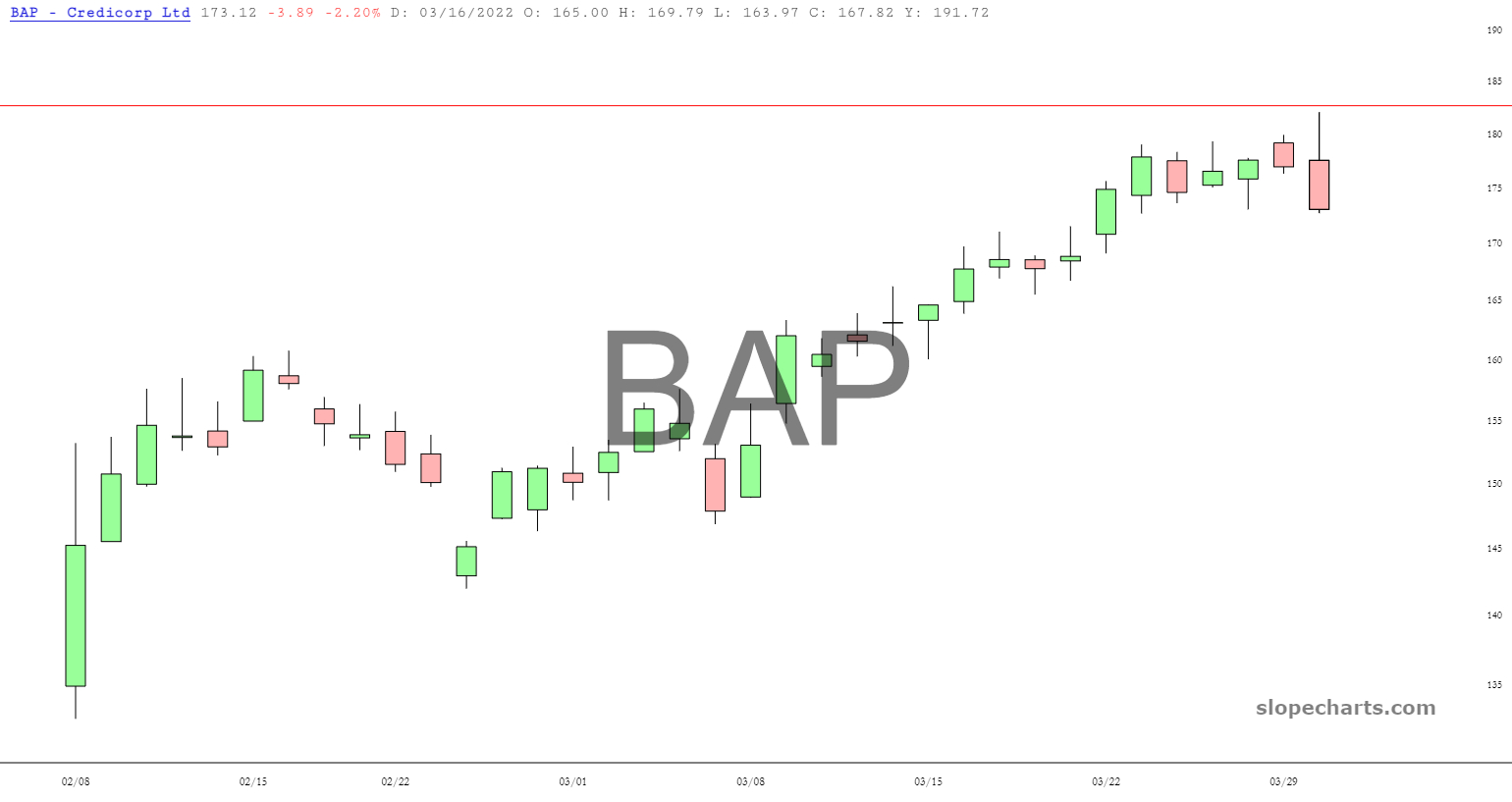
BAP

Tagged it.
Peru probably done too, maybe along with the rest of LatAm.

2021-11-24

King Dollar Becomes Emperor: Currency Valuation with Political Modifier

When I was in college my senior thesis was on economic freedom. I used the Fraser Institute Economic Freedom Index and looked through all the factors that go into the score to tease out what was important. Some of my sources were books such as DeSoto's Other Path (which also informs some of my thinking around blockchain). One thing I quickly found was signals were difficult to tease out because most developed nations were also politically free. China was a huge confounding data point because it was politically unfree, but moving towards economic freedom. Also, the index is subjective. China for example, doesn't have "hard" property rights, property rights are fairly well assumed in Chinese culture and the CCP largely reflects this tradition. Not to go down a rabbit hole, but I can both accept that Chinese property rights are very loosely held because I understand the CCP's power advantage in society, while at the same time recognizing that the economy functions as if this advantage will not be abused. Long story short, I was trying to look at economic development like a state and find what are the key components for prosperity?

If we assume a currency is to some degree a reflection of the entire economy and its economic freedom, then we should discount currencies of less free nations if the government's power stretches into economics and property rights. Singapore is the go to example of a nation with less poltiical freedom, but very high economic freedom. I'm going to leave off countries like the Peru described in DeSoto's book, that lack property rights because of poorly functioning law. I believe every nation is unique. A lack of freedom and prosperity can be cultural issues rather than political. The Amish don't allow technology after a certain date, yet they are free to leave and have property rights. Are the Amish as free as other Americans? My sense, informed in part by living in China for a long time and finding that much of what in the West was called communism is actually Chinese or Confucianism, is that the universalist approach of the West confuses culture, religion and politics. Most people freely choose to restrict freedom in some way. They elevate community, they believe in God, sacred things are priceless. The hyper-American view of individuality is not universalist, but particular. I think this all matters when looking at something like economic freedom, but throw that all aside. I want to focus on hard power. On goverment abuse of its political power.

One thing I've said about China's capital controls is that it devalues the yuan. Even though they are holding the line on the exchange rate, the yuan is worth less if it cannot be freely exchanged for foreign currency. That is to say, there is some theoretical value of the yuan and there is the price the government controls, and that theoretical prices goes down when something like capital controls are instituted outside of a crisis. I'm not arguing the theoretical price should be the market price, the market is always "wrong" for your personal valuation. My point is only that if we take all the components of what makes a currency valuable, and think blockchain here if you want, the ease of spending it and exchanging it is a component.

What is the value of the euro, pound, Australian dollar and so on if they are locking down their economies? If they can shut your business? If they can arrest you and place you in a detention camp? If some African country started doing this, the currency might well devalue, no? Assuming it wasn't a highly competent state like China that was engaged in some targeted persecution, a society-wide lockdown would obviously be a signal to sell the currency.

More granularly, what happens to economies that are locked down? The government takes on more debt to stimulate the economy and the central bank monetizes it. If we grade all the economies based on their lockdown policies and their central bank policies, which currencies are better and which are worse? The U.S. is a mixed bag, but if you can travel into the U.S., most of the South and West, the rural and Red states, have almost total freedom with respect to the pandemic. There is almost no mask wearing for example. The pandemic is over in these states.

What is going on in Australia is off the charts criminal. The state is behaving like a totalitarian dictator and everyone seems to think it's OK because the government was elected. Lifesite: Australian army hauls 38 citizens to quarantine facility over some positive COVID tests

Link: Northwest Territory detention camps open for business

So the exit question is, how would you value the Australia dollar if the government never relinquishes their power? Or what if Australia has permanently turned the totalitarian ratchet forward, such that they will eventually ease their economic controls, but they will not revert back to the pre-pandemic level. Is the Australian dollar worth more or less? Does it deserve a "permanent" haircut on the exchange rate with the U.S. dollar for as long as these conditions persist? If lockdowns create permanent economic damage via inflation, shouldn't lockdown countries see their currencies devalued?

2021-04-19

The Next Great Short: Peru?

There's a good chance Peru will vote for a change in June. Pedro Castillo leads 42-31 in the first batch of run-off polls ahead of the June 6 election. The guy is all over the map in his public comments, but he consistently sounds like an amalgam of traditional leftist economics and traditional rightist social policy.

Jacobin: With Pedro Castillo, Peru Has a Chance to Vanquish Fujimorismo

The Western press laels him as far-left. He definitely has some traditionally left-wing economic views, but he seems more like a nationalist than a socialist.

The fact that Castillo has issued incendiary statements about the need to dissolve Congress and eliminate the Peruvian Constitutional Court — two unpopular public institutions — further inflames concerns that the current front-runner is a frenzied authoritarian.

But it is important to situate Pedro Castillo’s rhetoric and positions in the context of his background. He first came to prominence in 2017 as the leader of a nationwide rank-and-file teacher strike demanding funds for education and improved wages. The dramatic action, against the neoliberal education reform measures of President Pedro Pablo Kuczynski, proved to be one of the most significant in recent times — particularly noteworthy considering the lingering effects of Fujimori’s efforts to bring all trade union activity to heel. In retrospect, the 2017 strike can be read as part of a wave of building social momentum that eventually erupted in anti-neoliberal protests last December.

From 2005 to 2017 Castillo was affiliated with Perú Posible, a centrist catchall party led by the former president Alejandro Toledo. In 2017 he joined his current party, Perú Libre. Perú Libre proudly claims to be a Marxist-Leninist formation and essentially proposes a conventional left-wing program centered around increased spending on education and health services, the nationalization of key extractive sectors, and a host of anti-corruption measures like salary limits for congressional members. The party belongs to the São Paulo Forum along with organizations like Brazil’s Workers’ Party and Argentina’s Peronist coalition Frente de Todos.

The real sticking point for large parts of the Peruvian left has to do with Castillo’s pronounced social conservatism. Their distrust, however, needs to be placed in its right context.

Fondly referred to by supporters as the candidate for “deep Peru,” the country’s provincial interior has been the source of some strange political ventures in recent history. These include Antauro Humala’s Ethnocacerist movement, a purportedly Marxist-Leninist organization that advocates for military conflict with neighboring Chile and promotes an ethnically based vision of Peruvian nationalism based on Quechua supremacy.

The fact that Castillo has openly claimed that, if elected, he will release Humala from prison — currently serving a sentence for leading the 2000 military revolt against Fujimori — has raised eyebrows. As has Castillo’s embrace of anti-immigrant — specifically anti-Venezuelan — rhetoric.

Castillo opposes the legalization of abortion, same-sex marriage, and policies promoting gender equality — a stance unremarkable on its face given those same positions, in one form or another, are common to many of the region’s progressive leaders.

But Peru is also, along with Brazil, one of the Latin American countries where religious fundamentalism has made the biggest inroads into national politics. Rafael López Aliaga of the Popular Renewal party almost made it into the second round by branding himself the “Peruvian Bolsonaro,” and Peru is home base for the “Con mi hijo no te metas” campaign, a continent-wide propaganda movement that incites hatred against women and the LGBT community.

The Agricultural People’s Front of Peru (FREPAP) failed to cross the 5 percent threshold required to win congressional seats, but the bizarre millenarian cult promoting Christian theocracy and indigenous supremacy remains an important political player.

Unlike other segments of the Left in the country, Castillo hasn’t shown a willingness to critique these formations.

Maybe he's a nationalist socialist? Whatever he is, the Western press is setting him up as a far-leftists. That will be bearish for Peruvian assets and the Peruvian sol should he win. My pick for a play is Credicorp (BAP).

2021-04-13

Will Peru Follow Venezuela? USDPEN to 5 If Yes

Presidential election upsets rock Ecuador and Peru
Defying expectations, voters in Ecuador's presidential election opted on Sunday for a conservative ex-banker, Guillermo Lasso, over a protege of leftist former President Rafael Correa.

On Sunday in Peru, Pedro Castillo, a far-left candidate who was eighth in the presidential polls just a few weeks ago, finished first in the unofficial results with around 19% of the vote.

USDPEN is ready to run if Peru goes socialist. Nice reversal setup in SCCO too, which looks far more robust if there's a threat of nationalization. Lots of potential losers in the mining sector.

More to the point, if I have to make a geopolitical forecast based on technical analysis, the chart of USDPEN says they're going socialist.

2020-03-07

Latin America on the Brink

A stroll through charts in Latin America.

First currencies. USDCLP (Chile). Base, test, boom.
USDBRL (Brazil). Base, boom.
USDMXN (Mexico). Fakeout to breakout.
USDPEN (Peru) has a long way to go if it follows Chile and Brazil's currencies.
Country ETFs argue for a bottom, but there are also topping patterns that point to huge declines if they complete.
Individual stocks follow. These aren't selected for any particular reason as a group. Some are airport stocks that could sink if coronavirus spreads, some have nice patterns. My focus is on banks because of the currency component.

2020-03-06

2019-11-13

Latin American Currencies Ready To Stumble

All clear for global markets or are Latin American currencies about to light the next phase of the dollar bull market?

Bonus chart USDCNH.