


![[Most Recent Quotes from www.kitco.com]](https://lh3.googleusercontent.com/blogger_img_proxy/AEn0k_uR4fzdje74Wf9NFSGpIwMsercdloA5yqtdN0KU2uumpL5zMf-8MLNq27WAMP83r5EH04RD9UsjuBYQSj-n83KC374IHZvbvCGHu2rohRXHqqouYntk-JEPr3Q=s0-d)
|


ZH: China Cuts Reserve Requirement Ratio By 25bps, Boosts Economy With $70BN In Fresh Liquidity
Below I've reproduced my post from December 6, 2021: China RRR Cut is Bearish
ZH: China Cuts RRR By 50bps; More Easing Expected
Specifically, the PBOC cut the RRR by 50bps effective 15th Dec. The move will release CNY 1.2 trillion in liquidity - some of this new money will be used by banks to repay maturing loans from the PBOC’s medium-term lending facility and some of it will be used to replenish financial institutions’ long-term capital, the central bank said. There are almost 1 trillion yuan worth of the 1-year loans maturing on Dec. 15, the day the cut takes effect.It releases zero trillion in new lending. It eases financial pressure on banks who are probably running into some trouble because of the strong dollar. Look at the chart posted with the article. The RRR cuts come during the taper. They occur before yuan depreciation in August 2015 and before a broad global sell-off in risk assets in autumn 2018.


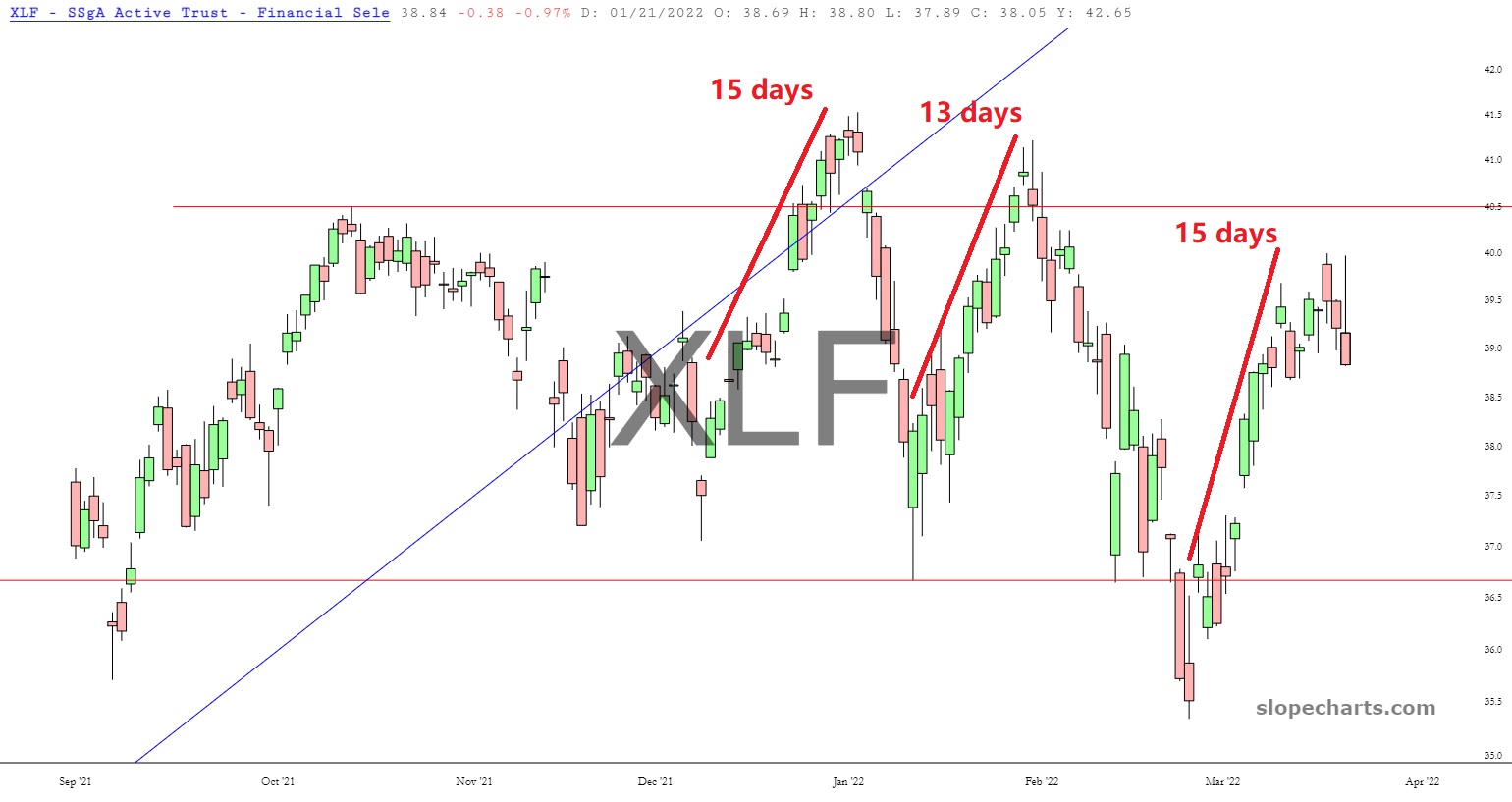
Side note: I noticed heavy put buying in XLF today and I almost jumped in to buy calls because everyone thinks this bounce is overdone and falling rates will harm financials. The latter is definitely correct over the coming months, but the direction of rates affects relative performance of financials, not absolute performance. Many of these stocks bounced off or near lows today. If the market rallies, they could run even if long-term yields continue falling.


This is a continuation of the story from a month earlier, when everyone across China from parts of Henan were given red codes on their covid passports, sending them all into lockdown, after runs on local banks.
Oriental Daily: 3000存户到郑州银行维权 爆发警民流血冲突The conflict of depositors’ rights protection broke out in Henan, China. On Sunday, nearly 3,000 bank depositors from all over the country protested outside the Zhengzhou sub-branch of the People’s Bank of China, but were surrounded by a group of police and unknown persons, causing bloody clashes between the two sides.That is almost $6 billion in U.S. dollars.Many people held slogans demanding the bank to return their deposits, and even wrote "oppose the capriciousness of power, oppose the violent beating of depositors by the Henan provincial government in conjunction with the underworld", "resist the violent treatment of depositors by the Henan police, oppose oppression, and demand the rule of law for human rights.
The depositors (depositors) of Henan Rural Banks were unable to withdraw cash in April. In June, they wanted to go to Henan to retrieve their deposits, but were unable to travel due to the "red code from the sky". The incident has attracted great attention, and the amount involved may be as high as nearly 40 billion yuan (about 26.434 billion ringgit).
First, roughly sort out the sequence of events in Henan. First, in May, there was a run on depositors in some village banks in Henan. Then, in the past few days, a new first-tier city and Zhengzhou, the capital of Henan Province, gave red codes to some village bank depositors, which affected the normal life and travel of depositors. The most ridiculous thing is that a local from Henan who worked in Shenzhen was also given a red code.Of course, this matter is absurd. After the hot search, I received a lot of scolding. Even Hu Xijin couldn't help but say it. He believes that the health code should not be used indiscriminately in social governance, because it not only violates the relevant epidemic prevention regulations, but also It will damage the credibility of the health code and affect the overall situation of epidemic prevention. Even Hu Xijin refused to wash the ground for this kind of thing, which shows that this thing is indeed absurd to a certain extent.
This matter is, of course, the problem of village banks.
Village banks have not been around for a long time, less than ten years ago. The earliest village banks in the country appeared in my hometown of Qingyang, and then they were widely spread across the country. The common problem of village banks is that the shareholding structure is very complex, and there are many stakeholders involved. Another problem is that the vast majority of banks are very small, the registration is basically only a few hundred million yuan, and the ability to resist risks is very low. With a little bit of trouble, there will be a crisis. Sometimes even personnel changes can bring crisis.In fact, not only village banks, but also rural commercial banks at the county level restructured from the original rural credit cooperatives are in a similar situation. Especially in the underdeveloped areas of the central and western regions, the county-level rural commercial banks have very small plates, relatively small registered capital, and relatively low anti-risk capabilities. In 2019, the Rural Commercial Bank in Yichuan County, Henan Province experienced a large number of depositor runs due to personnel changes. Recently, in Henan, there have been a large number of runs on some villages and towns banks due to "storms".
These financial institutions at the county and township level were established during the economic upswing. If the economy continues to develop, the operation of these financial institutions will not be a big problem, but if the macroeconomic situation is unstable, it is difficult for these financial institutions to maintain normal operation, especially their own The regional characteristics of the economy are relatively obvious. Once some rumors appear, causing a large number of depositors to run, there will be a crisis. For large commercial banks, there may be very few problems of runs, but such small-scale financial institutions at the grass-roots level are still prone to this situation.


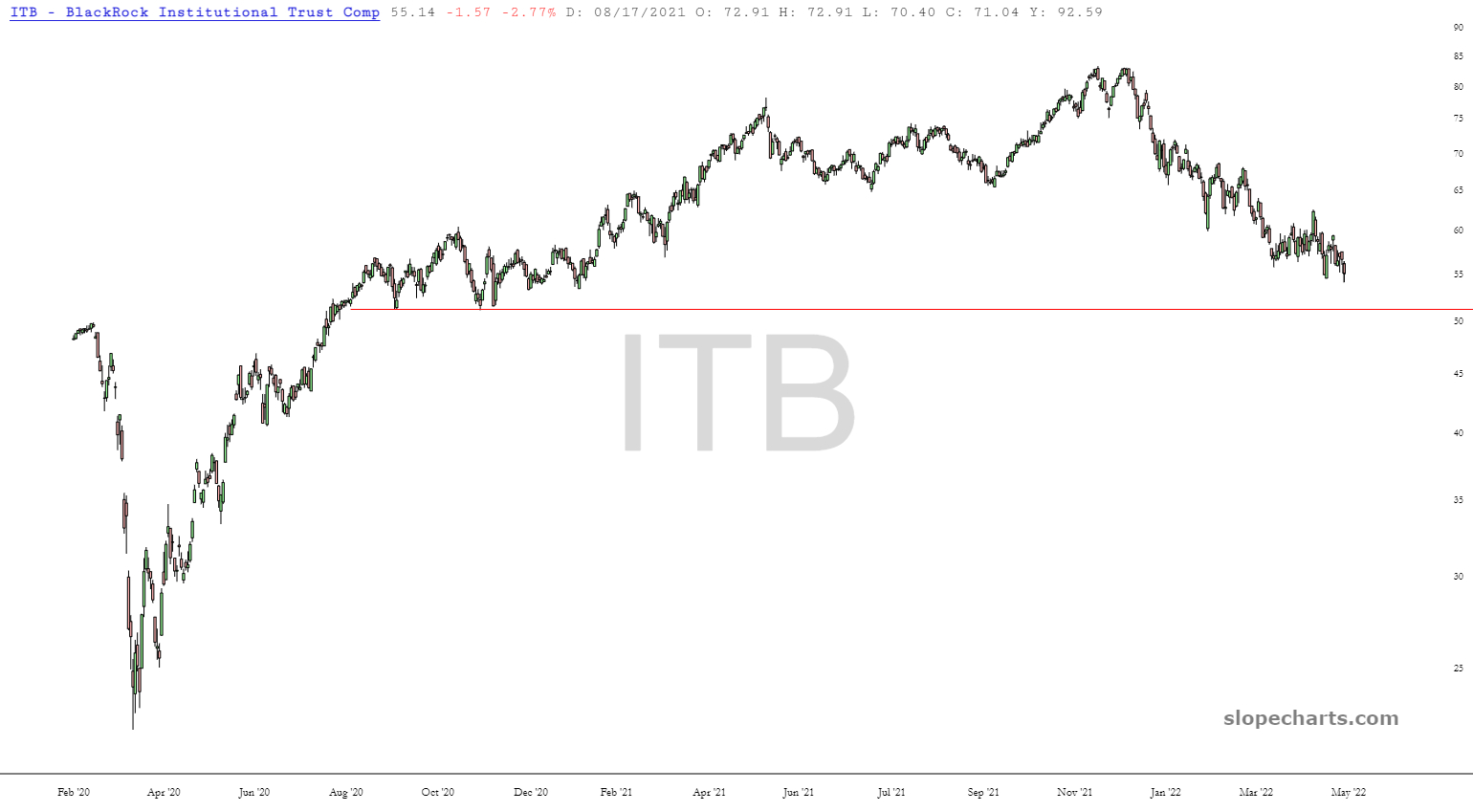
Last year, a 30-year fixed rate mortgage was around 3 percent. The monthly mortgage payment on the average $270,000 home, assuming a 20-percent down payment, would have been $1,200 per month. (I'm not touching any of the assumptions in the mortgage calculator.)
This year, this down payment would be $14,000 more and the monthly mortgage payment $1,760, an increase of 47 percent.
If the homebuyer could only afford $1200 per month, they can only afford a house that is around $210,000, a decline of about 22 percent.
Home affordability is in a death spiral.
As the market interest rate pricing self-discipline mechanism encourages some small and medium-sized banks to lower the floating ceiling of deposit interest rates by about 10 basis points (BP), large state-owned banks have also joined in.Recently, the 2-year and 3-year ordinary time deposit interest rates of some large state-owned banks have been lowered. According to the mobile banking apps of various banks, the time deposit interest rates of ICBC, Bank of China and China Construction Bank have generally been lowered by 0.1 percentage points.
...At the same time, Wang Qing also pointed out that this phenomenon is also a manifestation of the improvement of the transmission efficiency of monetary policy.
The reduction of deposit interest rates will help reduce the pressure on bank interest margins. There are two ways to adjust interest rates in the future.
Recently, a major state-owned bank has lowered the interest rate of large-denomination certificates of deposit and time deposits. What benefits will this approach bring? Zeng Gang, deputy director of the National Finance and Development Laboratory and director of the Shanghai Finance and Development Laboratory, previously stated, "The drop in deposit interest rates, in terms of supporting the real economy and reducing the financing cost of the real economy, is actually a reduction in the loan side that banks can make profits. The space is opened up, and there is a further possibility of reducing the overall cost of the entity.”


Bloomberg: China Cabinet Vows Monetary Stimulus, Saying Risks Worsening
Officials will use multiple monetary policy tools at an “appropriate time” to support the real economy, according to a readout from a meeting of the State Council chaired by Premier Li Keqiang on Wednesday. The “complexity and uncertainty of domestic and foreign environments have intensified, and some have exceeded expectations,” the meeting said.Credit easing doesn't work because of debt problems and restriction on housing speculation. Credit grows if there is a housing bubble, otherwise not. The government has to force investment if it wants more growth. They are talking about front-loading spending, but not doing any major stimulus yet.The State Council, China’s Cabinet, didn’t mention specific easing steps, like reducing the reserve requirement ratio. It previously gave signals for a RRR cut in July and December days before the People’s Bank of China cut the ratio.
Chinese authorities have made repeated vows to stabilize the economy in recent weeks as Covid restrictions curtail spending and business activity. A gauge of sentiment in the services sector fell in March to the lowest level in about two years, while the country’s financial hub Shanghai is in total lockdown. That’s putting the government’s ambitious growth target of about 5.5% for this year in doubt.
The State Council said that while the economy is still moving in a reasonable range, new downward pressures have intensified, with more frequent virus outbreaks, a slowing global economic recovery and fluctuating commodity prices. The government should promptly introduce measures that are conducive to stabilizing market expectations and bring forward some policies laid out in the government work report, it said.
Top financial leaders pledged last month to ease regulatory crackdowns, support property developers and stimulate the economy through monetary policy. However, few concrete steps have been taken so far.
iFeng: 燕郊首付降至20%?被套的北漂买家:五年前赶着上车,如今房价跌了一半
However, Yanjiao is not Beijing after all, and it is difficult for the needs of "beijing drifters" to support the huge stock market. Recently, there has been news that Yanjiao is trying to relax the housing purchase policy to stimulate the property market, reducing the down payment ratio for the first house to a minimum of 20%, and the down payment ratio for the second house to a minimum of 30%. Prior to this, the down payment ratio for the purchase of a house in Yanjiao was 30% for the first set and 50% for the second set.One anecdote from the market:Times Finance learned from the local real estate agency in Yanjiao that the store has indeed received a notice that the down payment ratio has been reduced, and many real estate agencies have begun to use "low down payment" as a gimmick to persuade customers to "get on the bus" as soon as possible. However, on April 7, news came again from the Yanjiao market that some banks stopped the reduction of the down payment, and the real estate agency also told Times Finance that the "down payment reduction" may have to wait.
Cai Zhiqiang works in Wangjing, Beijing. During the morning and evening rush hours, the commute time from Yanjiao to Wangjing is at least an hour and a half. When there is a serious traffic jam, the time is even more unpredictable. In the evening, in order to avoid the rush hour, Cai Zhiqiang always worked overtime on his own. He waited until the road conditions improved after 9 pm before leaving home, which was often late at night.Assuming he made a 30 percent down payment, his loan-to-value ratio has fallen over the past 5 years. He has 300,000 yuan in equity, down from the roughly 900,000 yuan down payment he would have dropped in 2017 if the 30-percent down payment as in effect.The fatigue of commuting is not the main reason why Cai Zhiqiang regrets buying a house in Yanjiao. What he did not expect was that the Yanjiao property market was in full swing in 2017. After just three or four years, the hot situation was completely reversed, and house prices fell all the way. Last year, Cai Zhiqiang's neighbor listed a second-hand house with the same size of 73 square meters, and the price had fallen to 1.5 million yuan.
"Watching the housing prices in Yanjiao keep dropping in recent years, I feel like I've been deceived. The listing price of 1.5 million yuan can be said to be a blood loss. As far as I am concerned, the unpaid loan plus interest is still there. 1.2 million yuan. Moreover, few people came to see the house after it was listed. It has been listed for almost a year, and it has not been sold yet.”
The marketing director of a real estate company in Beijing told Times Finance that the property market in the north has not been ideal in recent years. Even in Beijing, it is in a stable state, with few sharp rises and falls. The investment logic of the property market around Beijing is attached to the Beijing market. After the market stabilized, the premium space of the Beijing-based property market was curbed, which caused a large market shock.Elsewhere, banks are offering six months of mortgage relief because of the lockdowns."Whether it is a home buyer or a real estate company, as long as they rushed into the Beijing-based property market at a high level a few years ago, most of them can't escape the fate of being 'set'. Now real estate companies will still selectively deploy the Beijing-based property market, with sufficient funds. In contrast, many private housing companies are significantly reducing the frequency of taking projects around Beijing.”
iFeng: 银行纾困房贷还款:最长延期半年
Liao Xing, who has been working in Shanghai all the year round, did not expect that the spring of 2022 would be spent in Shangrao, his hometown.Emphasis in the original."The mortgage is about to be repaid, but I still don't know when I will go back to work. The bank can give me some time to slow down." Since buying a commercial house in his hometown last year, Liao Xing has taken on a mortgage of about 3,000 yuan per month. . When the epidemic hit, Liao Xing's income dropped sharply, and the pressure on loan repayment increased sharply.
This may be the epitome of some people who have bought houses at present. Recently, information about asking for help due to the impact of the epidemic on income has been frequently seen on the Internet, and discussions on "deferred mortgage repayment" have also rushed to the hot search.
"It's so necessary, it's time to embody the bank's sense of social responsibility!" On social platforms, the voices that banks should give support are getting louder.
Industry insiders pointed out that the current epidemic has an impact on personal cash flow, and a reasonable extension is better credit protection for individuals, reduces the impact on future financial activities, and is conducive to better support for people's livelihood development.
According to the reporter of Caijing, many banks, including large state-owned banks, joint-stock banks, and urban and rural commercial banks, have responded to this. Some banks have introduced targeted measures, including grace period and credit protection protection, for areas severely affected by the epidemic. However, in general, there is no unified policy issued by each bank at present. Industry insiders believe that due to the large number of details involved, it is unlikely that banks will fully implement loan deferrals.
If I lend you money today and you agree to pay me back in 30 years, only extreme failure and extreme outlier events will cause bankruptcy. If you run into trouble in year 5, am I going to worry that you won't repay me in 25 years? Hardly. I may become concerned and get involved with your business to make sure I am paid, but if you have backed that loan with assets, then I'm not going to be worried much at all. I might offer no interest this year. Pay me year 5 and 6 interest next year, plus a little penalty. Both of us survive and thrive.
Banks borrow short and lend long though. If I take out a 1-year loan that I have to roll every year, and I lend you that money for 30 years, then your problem in year 5 is a big deal. It becomes my bankruptcy in year 5 because my lenders want their money now and if they decide they can't get it back from me this year, they (or another lender) might not lend to me for year six. My liquidity goes from 100 to 0 instantly. Game over. Financial crisis for me, and the whole economy if everyone is doing the same.
Now think about someone who is selling commodities in the future and sources the supply later. When markets are functioning, it is easy. Sometimes prices are volatile, but manageable. What happens when it becomes illegal to buy from the main supplier?



Purchasing wealth management products can reduce the interest rate of mortgages, apply for a loan and give legal consulting services... Following the "interest rate cut wave", some banks have launched "fancy" customer solicitation activities.China Securities Journal • China Securities Taurus reporter recently investigated and found that the mortgage interest rates in Guangzhou, Nanjing, Suzhou and other places have dropped significantly, and Suzhou has even experienced a rise in interest rates. In terms of the lending cycle, the lending review of banks in various regions is relatively optimistic, and some banks even said that the procedures are complete and they can lend on the same day.
In addition, some banks adjusted loan review requirements on a prudent basis, and appropriately simplified the review of down payment sources, social security, and running water.
Guangzhou area "fancy" interest rate cut
The reporter learned from the survey that the interest rate of the first-home commercial loan of the state-owned banks in Guangzhou has remained at around 5.4%, which has remained basically stable after the reduction last month, but there are still many joint-stock banks and city commercial banks that have staged "fancy" interest rate cuts. Strategy.
Zhang Hua (pseudonym), the personal loan manager of a joint-stock bank in Guangzhou, said: "The loan interest rate for the first home has just been adjusted recently, and it is currently 5.35%. However, if you upgrade to a VIP customer, the loan interest rate can be reduced by another 5 basis points; upgrade to a private bank. Customers, you can try to apply for the lowest interest rate of 5.25%.”
The reporter learned that the bank's standard for VIP customers is that the average daily deposit amount reaches 500,000 yuan per year, and to become a private bank customer, the average daily assets need to reach 6 million yuan in the month of applying for a loan. "Banks are more inclined to provide loans to customers with better credit status. Therefore, more interest rate concessions will be given to customers with stable capital flow and better asset quality." Zhang Hua said.
A business employee from another joint-stock bank in Guangzhou revealed: "The current interest rate for the first home loan is 5.3%, and the second home loan interest rate is 5.6%. However, if you can buy new 1 million yuan of funds to purchase the bank's wealth management or deposits and other products, you can apply for a loan interest rate drop. A 10-20 basis point discount.”
In addition to domestic banks, foreign banks have also made great efforts to "cut interest rates".
Credit consultants of many foreign banks in Guangzhou said that the loan interest rate for the first home can even be as low as 4.8%, and the loan interest rate for the second home can be as low as 5.2%. However, some foreign banks said that the housing listings that can apply for the lowest loan interest rate are limited to properties located in some high-quality locations and within 20 years of age.
In addition, a number of banks in Nanjing have launched a "price war". The reporter's survey found that the current first-home loan interest rate has dropped to between 5.4% and 5.6%, a reduction of about 20-30 basis points.
In the Suzhou area, there is a situation where the interest rate is 0 plus points. A personal loan officer from a joint-stock company in Suzhou told reporters: "Currently, the interest rate for the first home and the loan-free second home can be applied for at least 4.6%, and there is no increase on the basis of the 5-year LPR, which is almost the level of three years ago."
The mortgage interest rates in Beijing, Shanghai, Shenzhen and other regions were relatively stable, fluctuating within 5 basis points, and there was no significant reduction.
Disburse as soon as the day
A staff member of the personal loan center of the Beijing branch of a state-owned bank told reporters: "Now the result of the approval can be obtained in about a week, and there is no need to queue up. The loan can be completed within three weeks after the transfer."
A personal loan officer from a joint-stock bank in Beijing said: "The approval is very fast, and it can be completed in two or three working days. At present, the mortgage loan amount is sufficient, and the loan of less than 5 million yuan can be released on the same day as long as the preliminary procedures are complete."
The overall lending speed in Guangzhou has also increased significantly. Many banks have accelerated the lending speed to within one month after the transfer of accounts, and some banks have stated that "the loan will be released in about 3-4 working days after the deposit is issued".
Down payment traceability audit is simplified
In terms of loan review, the Guangzhou region made some adjustments on the basis of prudence.
"Now the review can be completed within two weeks, and the results will be available within 5 working days at the earliest," Zhang Hua revealed to reporters, "The review is still very strict, but some unnecessary links are simplified. For example, parents In the case of transferring money to a child to buy a house, the source of the down payment used to be traced back to the parent’s account review flow, but now it is only necessary to submit the relevant proof that the source of the buyer’s money is the parent.”
A number of banks in Guangzhou said that since February this year, the review policy has been continuously fine-tuned. "When we come back this year, we have simplified the review of social security and account flow, mainly to see if there are bad credit records, or important indicators such as loans and foreign debts." said a loan manager of a joint-stock bank.
A real estate brokerage consultant told reporters that some banks had previously required lenders to have a monthly turnover higher than twice the monthly payment, limiting the amount and duration of loans that homebuyers could borrow. Simplifying the review of social security and bank accounts now is good for homebuyers.
Another Guangzhou joint-stock company said: "At present, there are no restrictions on the customer's work unit, and the income can meet the approval threshold. The requirements for monthly turnover are not high. When the customer handles the transfer, we also provide legal counsel services from professional lawyers."

Global News: Canada’s banking industry will carry out emergency orders to stop trucker convoy (Archive)
Canada’s banking industry says it will follow through with the federal government’s emergency orders targeting the trucker protesters as discussions on how best to implement them continue.Finbold: Five major Canadian banks mysteriously go offline in hours-long outage (Archive)The government published details late Tuesday on the requirements covering a wide range of the financial industry including banks, credit unions, insurance companies, portfolio managers and investment counselling services.
The Canadian Bankers Association said in a statement Wednesday that, as with other financial service providers, banks will “need to diligently implement the required measures.”
...The emergency orders direct financial institutions to suspend services to both individual and business clients who they suspect are aiding the blockades.
...Banks have been given protection from civil liabilities for actions done in following the orders.
Cryptocurrency platforms are also covered by the order and some, including Toronto-based BitBuy, say they’ve already received guidance on cryptocurrency addresses from law enforcement.
On February 16, five major Canadian banks went offline, preventing a number of customers from using e-Transfers, online banking, and mobile banking services.At this point, there is no safe money in the world. Every one of them is intrinsically flawed. For store of value, gold. The point here is not making money, but retaining value. Silver is more volatile than gold, making it good speculation, but a bad savings vehicle if your holding period is less than a full bull-bear cycle. BTC and other cryptocurrencies are ultimate speculative vehicles right now, not for savings.The financial institutions affected by the outage included the Royal Bank of Canada (RBC), BMO (Bank of Montreal), Scotiabank, TD Bank Canada, and the Canadian Imperial Bank of Commerce (CIBC).
The number of complaints of people experiencing difficulty accessing their online banking peaked between 5 p.m. and 6 p.m. Eastern time on Wednesday, February 16, while accounts of this issue are still occurring on Thursday, February 17, according to a report by BleepingComputer.
The best money for transactions is cash. That's why there is a war on cash: you can avoid the banking system and its attendant censorship with physical fiat. The government cannot "block" physical cash transactions and if it tried, the value of all its currency, including electronic, would plummet. Operating entirely in cash has risks such as physical security.
An alternative is a foreign payment system such as Alipay in China or WeChat. Bloomberg: Why China’s Payment Apps Give U.S. Bankers Nightmares
Alibaba Group Holding Ltd. created Alipay in 2004 to let millions of potential customers who lacked credit and debit cards shop on its vast online marketplace. Tencent Holdings Ltd., similarly, debuted its payments function in 2005 in a bid to keep users inside its messaging system longer.It makes sense to get Alipay or WeChat as a backup. Yes, China also enforces political and social credit blockades, but are you planning on running afoul of the Chinese government? If not, they aren't going to notice or care. Although I think the yuan is also in trouble in terms of devaluation risk, using physical yuan outside of China (or any nation that can stand up to the U.S.) has merit. Many people use U.S. dollars because it is the reserve currency, but it maintained that status in part because of the nation's open banking system and just law.Alipay and WeChat have since swelled in popularity, boasting 520 million and 1 billion monthly active users, respectively. Consumers sent more than $2.9 trillion inside the two systems in 2016, equivalent to about half of all consumer goods sold in China, according to the payments consultancy Aite Group.
Perhaps a new monetary standard will emerge from this chaos. There is opportunity for one now that the Canadian government has fired the first totalitarian shot in the West. While I never believed they would be proven wrong, predictions of totalitarian financial repression were still mostly predictions. Not anymore. All banking systems are now suspect. Operating inside the banking system is now high risk for anyone because the regime is mentally unstable. T he current situation is akin to the Cultural Revolution in China. Even people who are favored by the regime today could become its targets tomorrow.
The exit from the banking system will progress slowly, but it will accelerate destruction of the financial system. The next crisis could be a killshot for banks, either because the govt implements totalitarian control (with or without overt nationalization of assets) or the public retaliates by letting the banks collapse. The damage Trudeau inflicted on the banking system will hurt the government's repression campaign, which in turn accelerates the push for central bank digital currencies. These effects are going to spillover quickly. Everyone who pays attention knows "American" BigTech is already handmaiden for the authoritarian left. The time for a Parallel Economy is now. The Great Separation had begun.


