


FTAV’s Friday charts quiz
-
To those about to chart, we salute you

![[Most Recent Quotes from www.kitco.com]](https://lh3.googleusercontent.com/blogger_img_proxy/AEn0k_uR4fzdje74Wf9NFSGpIwMsercdloA5yqtdN0KU2uumpL5zMf-8MLNq27WAMP83r5EH04RD9UsjuBYQSj-n83KC374IHZvbvCGHu2rohRXHqqouYntk-JEPr3Q=s0-d)
|


The annualized three-month growth rate of M2 money supply growth hit 24.1 percent in March. The last time it hit 24.1 percent? July 2015. The “surprise” yuan depreciation was in August 2015 under similar economic circumstances.Everything is not the same, but the key component in this mix is the U.S. dollar...
iFeng: 楼市重磅!央行、银保监会:新房价格连降3个月,可放宽首套房贷利率下限
Reuters: China property shares firm on more policy support, easing curbs
The central bank said on Thursday that for cities where the selling prices of new homes fall month-on-month and year-on-year for three consecutive months, the floor on mortgage rates can be lowered or abolished for first-time home buyers in phases.China is also planning to relax restrictions on borrowing for property developers by dialing back the "three red lines" policy, Bloomberg News reported on Friday.
The property sector, which accounts for a quarter of China's economy


Risk gauges in Germany’s government debt market rose last week to levels higher than recorded in the 2008 world financial crash, as margin calls forced the liquidation of derivatives positions held by banks, insurers and pension funds.Big institutional investors that spent the past ten years insuring their portfolios against falling interest rates now face massive losses as hedges blow up. A key measure of market risk, the spread between German government bonds (Bunds) and interest rate swap agreements jumped above the previous record set in 2008.
The cost of hedging German government debt with interest-rate options, or option-implied volatility, meanwhile rose to the highest level on record.
All of which is to say, there's no way this was going to end well. The Federal Reserve's rate hikes are arguably having very little effect on the markets and in hindsight, will merely be a symptom rather than a cause. Suppressing volatility is like adding dry wood to a forest floor year after year, while preventing all forest fires. Eventually, all it takes is a spark for a forest-killing fire. The governments of the world started helicopter dropping gasoline in 2020. Western governments and China haven't stopped.

Researchers found that students may be incentivized to borrow more money because the Biden administration is capping loan repayments at 5% of borrowers' income
The largest potential cost-driver Penn Wharton identified is the Biden administration's new income-driven repayment plan, which includes capping monthly student loan payments at 5% of a borrower's discretionary income and reforming the repayment guidelines to guarantee that no borrower who makes "about the annual equivalent of a $15 minimum wage" will have to make monthly loan payments.My hunch is debt levels will not increase because there will be losses borne by lenders. Even if the amount of outstanding debt increases, the value of that debt will decline because repayment is less certain. When a bond goes from AAA to B, it deflates. The money supply declines because lower quality bonds do not function as money. If the Biden admin makes enough rules that favor borrowers, at some point the value of student debt will decline faster than new lending increases.Debt cancellation alone will cost the United States up to $519 billion, Wharton found in an analysis published Friday. Loan forbearance, which allows borrowers to temporarily stop paying, will cost an estimated $16 billion. The income-driven repayment plan will initially cost $70 billion, however, specific details have yet to be released and the price may be significantly higher.
The income-based portion of Biden's plan needs further analysis, but it may cost $450 billion or more, bringing the total cost of student loan forgiveness to more than $1 trillion, economist Junlei Chen wrote in the Budget Model.
One possible problem researchers found with the income-driven repayment plan is that students may be incentivized to borrow more money because the Biden administration's plan caps loan repayments at 5% of the borrowers' income.
Government financing guarantee institutions play a "booster" role in financial services for the real economy. Recently, the reporter learned from the Municipal Local Financial Supervision Bureau that as of July, the scale of government financing guarantees in our city has exceeded 10 billion yuan. In recent years, our city has accelerated the construction of a government financing guarantee system, increased credit enhancement support for small and micro enterprises, "agriculture, rural areas and farmers" and other entities, and is committed to providing high-quality, convenient and low-cost services for the city's small and micro enterprises and "agriculture, rural areas and farmers" entities. Financing guarantee services with high rates, focusing on alleviating the problems of difficult and expensive financing for enterprises.It is understood that the scale of government financing guarantees in the city has jumped from 4.47 billion yuan at the end of 2020 to 10.249 billion yuan in July 2022, and the number of small and micro enterprises and "agriculture, rural areas and farmers" customers in insurance has increased from 2,315 to 4,804. The average guarantee rate From around 1% in 2020 to below 0.5% in 2022.




Traded QQQ calls intraday.
Closed more TLT calls, still have some ZB calls.
Closed USO puts. Got out of long USO daytrade.
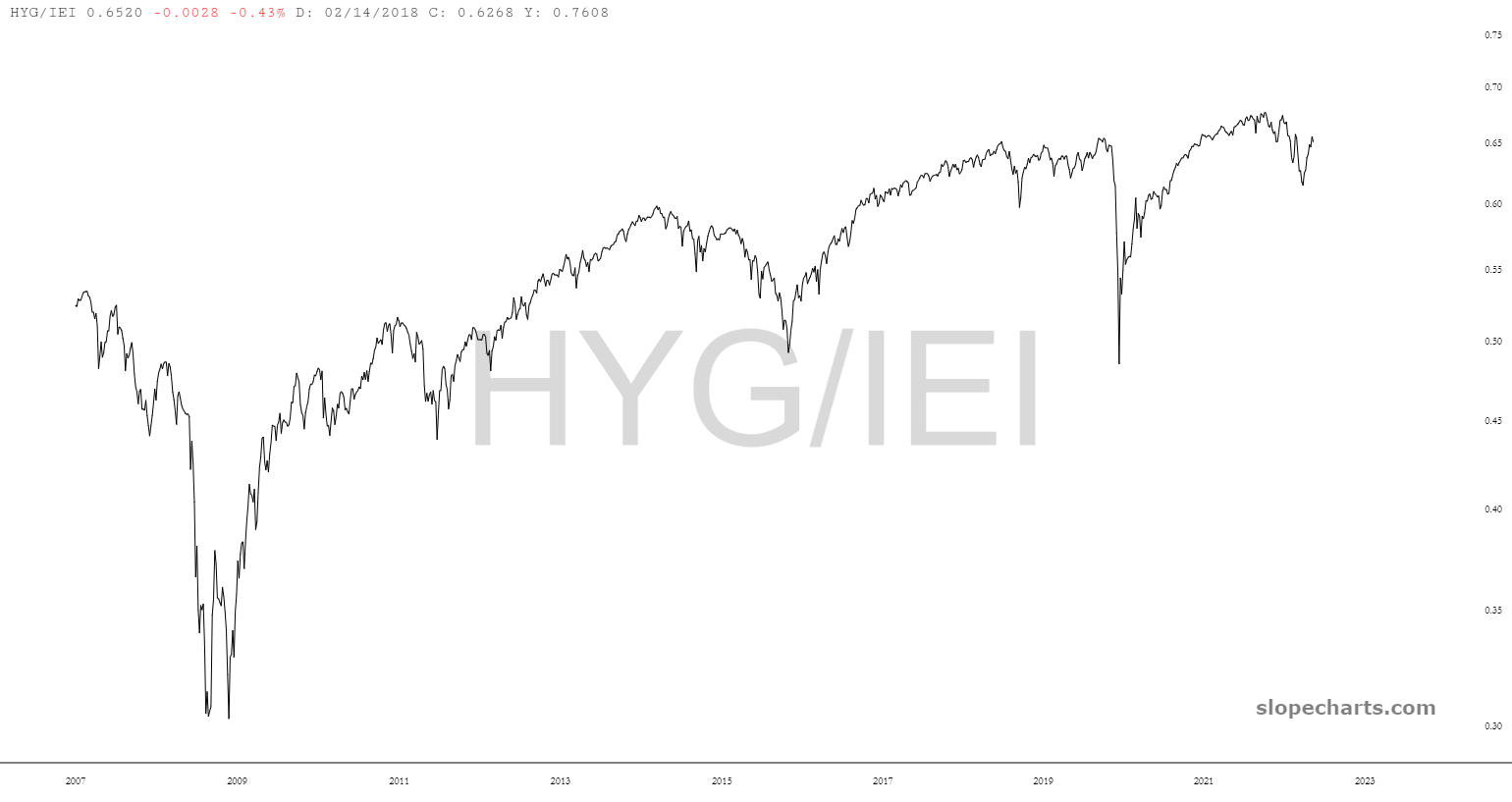
The next line in the sand is 3850 for the S&P 500 Index. Get above that and the rally can start taking shape, but there could still be a smackdown. The fact that JPY hasn't moved is not good, nor is the breakdown in the euro. I don't think those are necessary components for a rally, but they are potential nuclear bombs for the market should they collapse. The worst thing I see is HYG and credit spreads, also a big nuclear warhead hanging over the market. HYG was up today, but since treasuries popped far more, that indicates high-yield spreads are blowing out. My take is a rally requires those credit spreads to drop, then the trap door will slam on the bears. If high yield spreads keep rising and HYG breaks down, it'll be time to dump longs and go short for a plunge-o-rama.


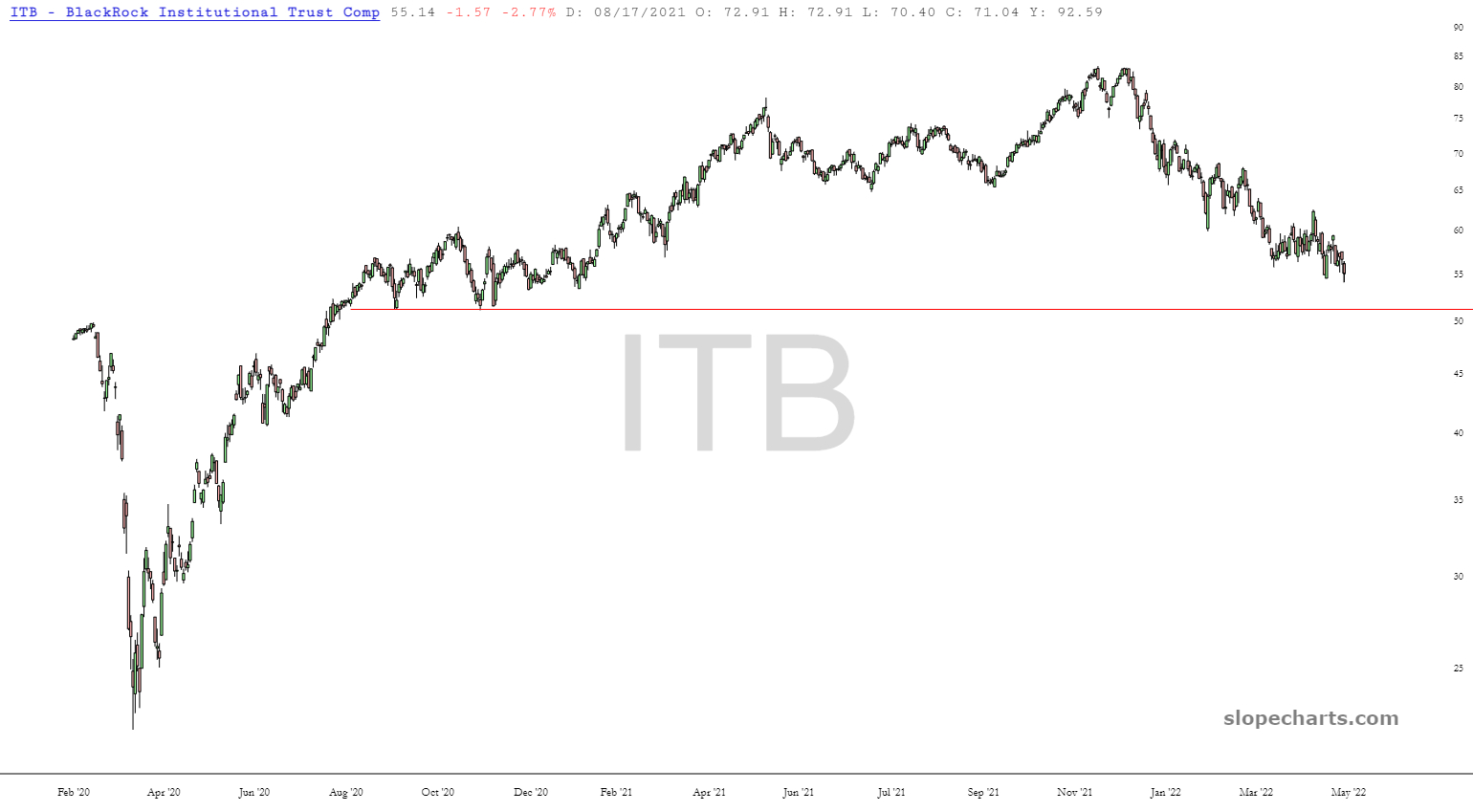


Last year, a 30-year fixed rate mortgage was around 3 percent. The monthly mortgage payment on the average $270,000 home, assuming a 20-percent down payment, would have been $1,200 per month. (I'm not touching any of the assumptions in the mortgage calculator.)
This year, this down payment would be $14,000 more and the monthly mortgage payment $1,760, an increase of 47 percent.
If the homebuyer could only afford $1200 per month, they can only afford a house that is around $210,000, a decline of about 22 percent.
Home affordability is in a death spiral.


